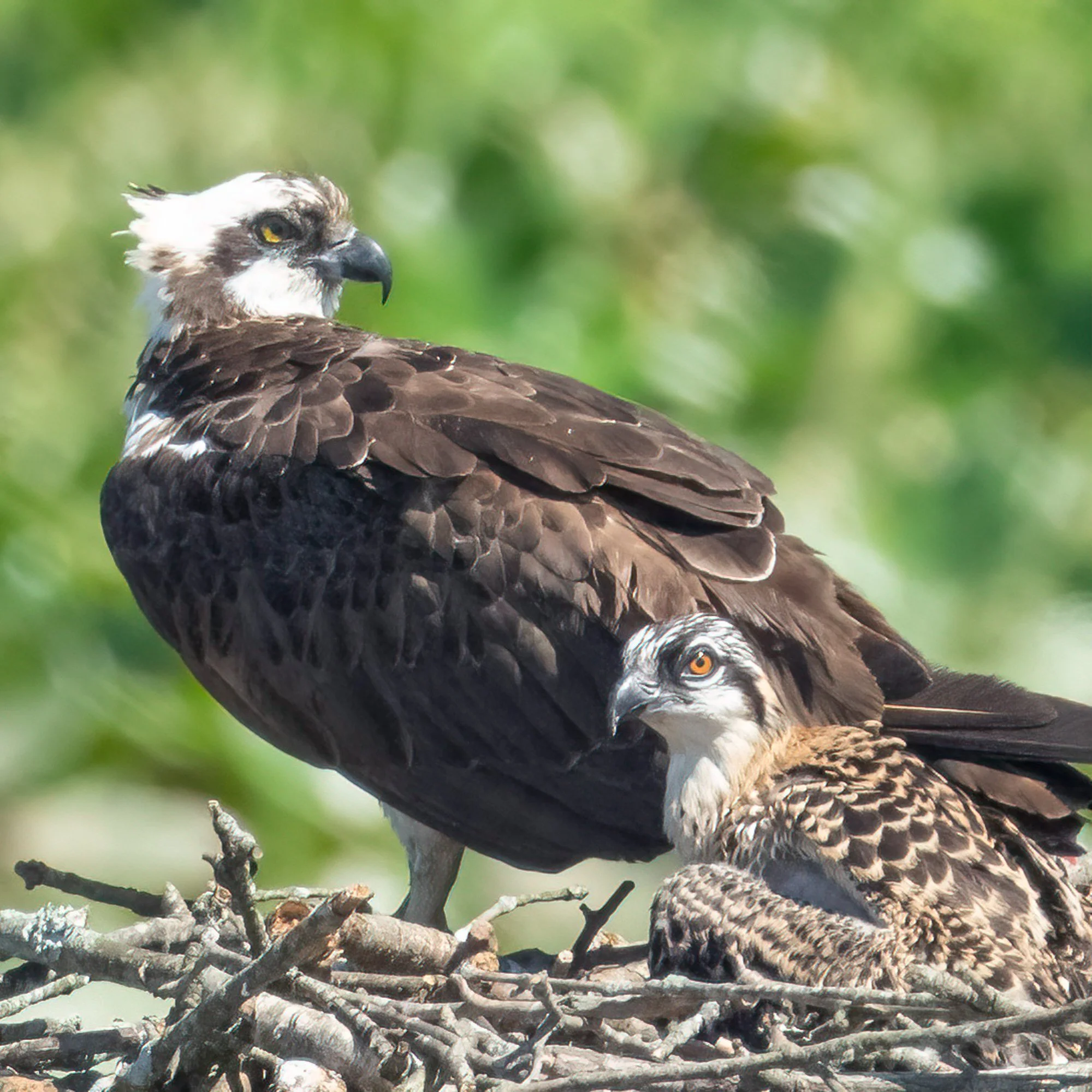
I learned that ospreys begin their Fall migration south while leaving the juvenile birds in the nest to figure it out for themselves. After months of tireless parenting, the time came when the young birds were literally on their own. As I reviewed my photographs of birds and their young, I began to see the differences and varieties of avian parenting styles. In this photo essay I chose a few images that illustrate some of these differences.
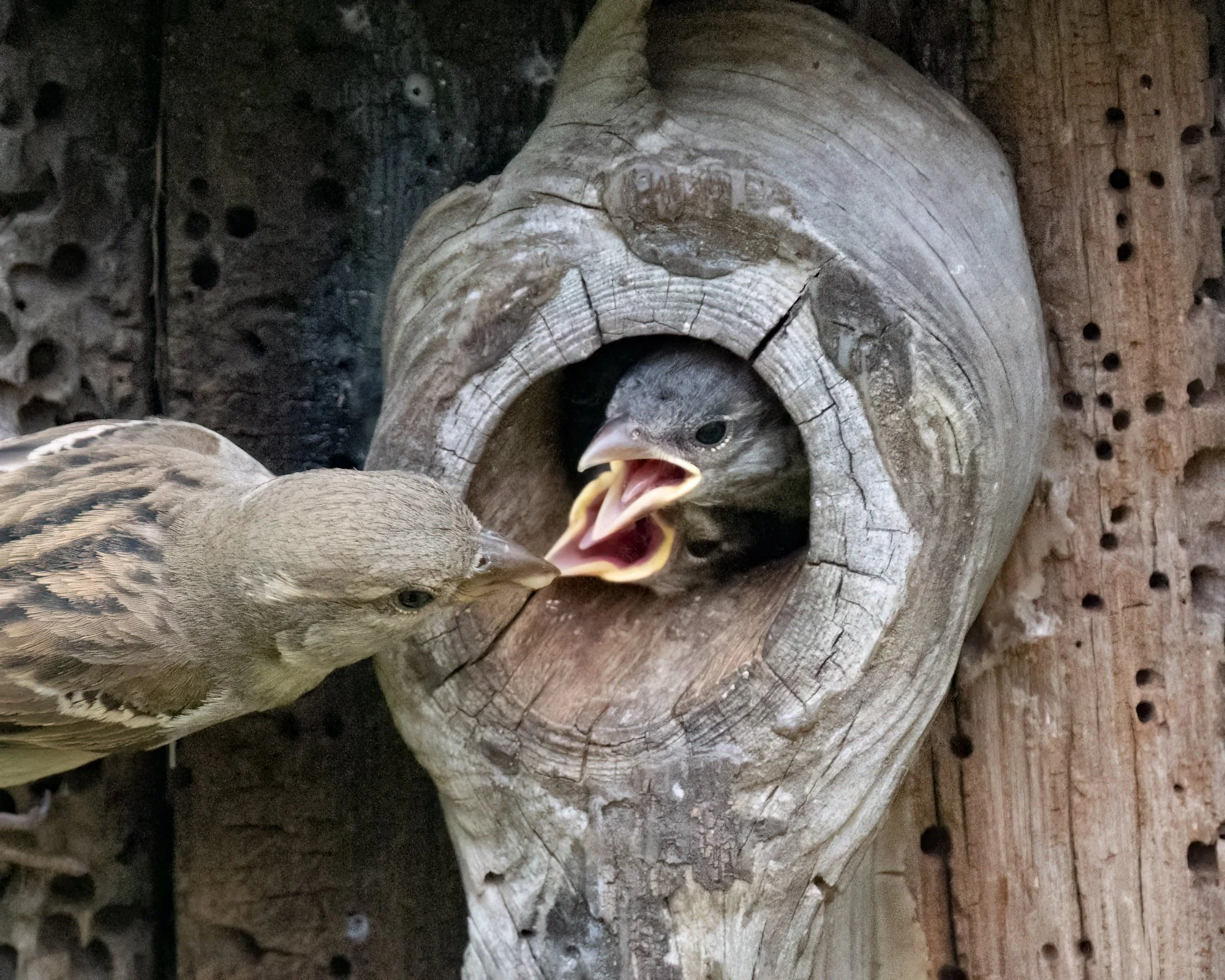
Songbirds and raptors like bluebirds and eagles are completely helpless when they hatch. They emerge without feathers and are totally reliant on the parents for their food and survival. The chicks are bound to the nest while the parents fly back and forth in a never-ending effort to provide food which they place directly into the mouths of their seemingly insatiable offspring. Even when the young birds fledge and begin to leave the nest, some species of songbirds will continue to provide food. Most often, both parents share the task of raising the young but for some species, only one parent (typically the female) has this chore. Then there are the cowbirds who lay eggs in the nests of other birds and literally “fly the coop” abandoning the eggs.
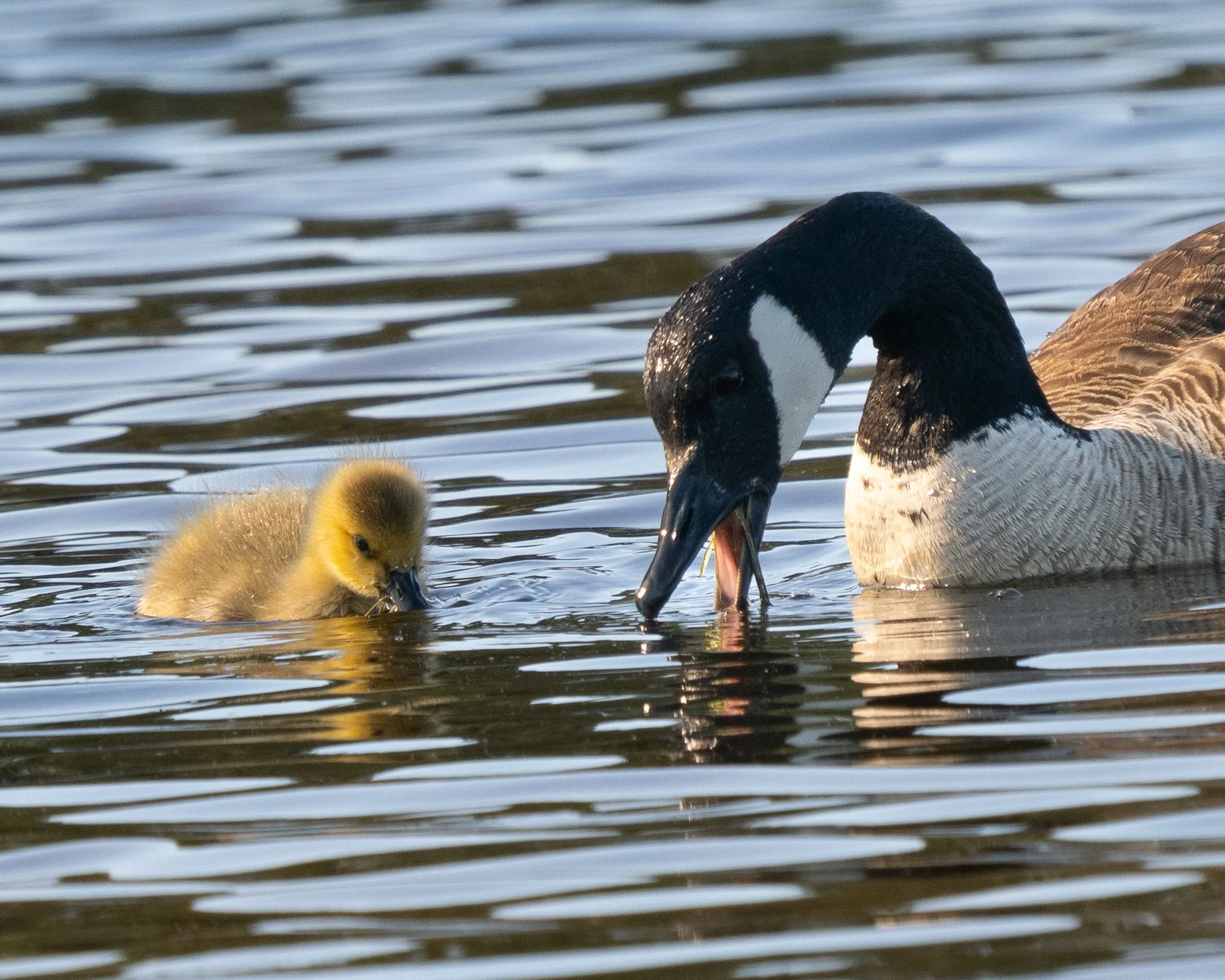
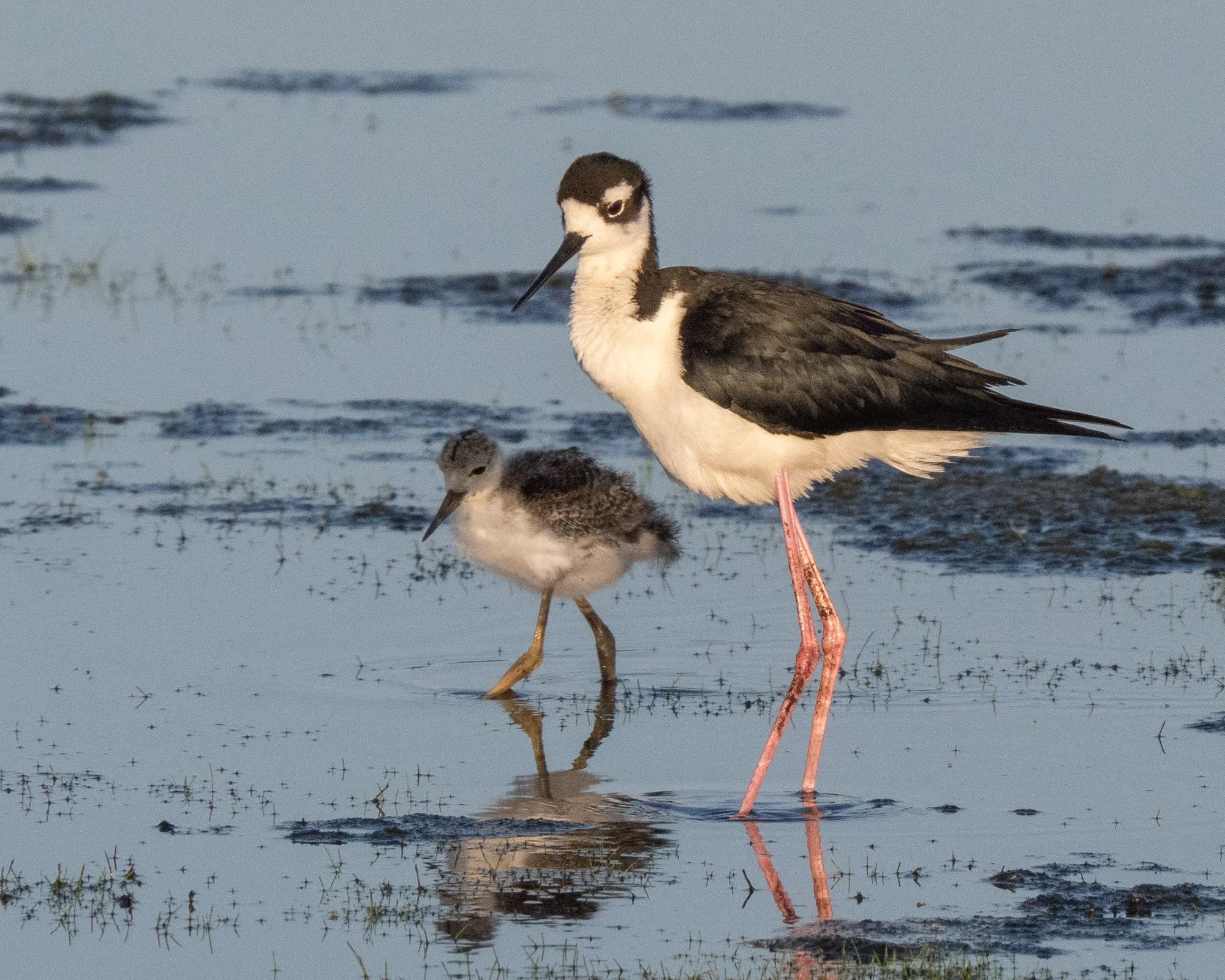
By contrast, ducks, geese and shorebirds are born with their eyes open and some downy feathers. They can walk, run and swim pretty much from the start. These birds are able to leave the nest almost immediately and follow the parents around as they forage for food. The parents provide guidance and protection from predators as the chicks quickly become independent. In the video below, watch as the chick (a black necked stilt) forages near the parent. He seems to see his reflection and then runs back to the safety of mom. Also, count the chick legs under the parent - looks like his siblings got there first.
It is interesting that the evolution of birds also included a distinct variety in parenting styles and the different ways the chicks mature. Thank you for your interest in my photo essays,