Earlier this month I was able to make my first visit to see the incredible biodiversity of the Orlando Wetlands Park located about 20 miles east of Orlando, Florida. This 1,650-acre wetland park was originally created in the 1980s to help filter wastewater from the city of Orlando. With careful conservation stewardship, the park is now a vibrant habitat for over 220 species of birds.
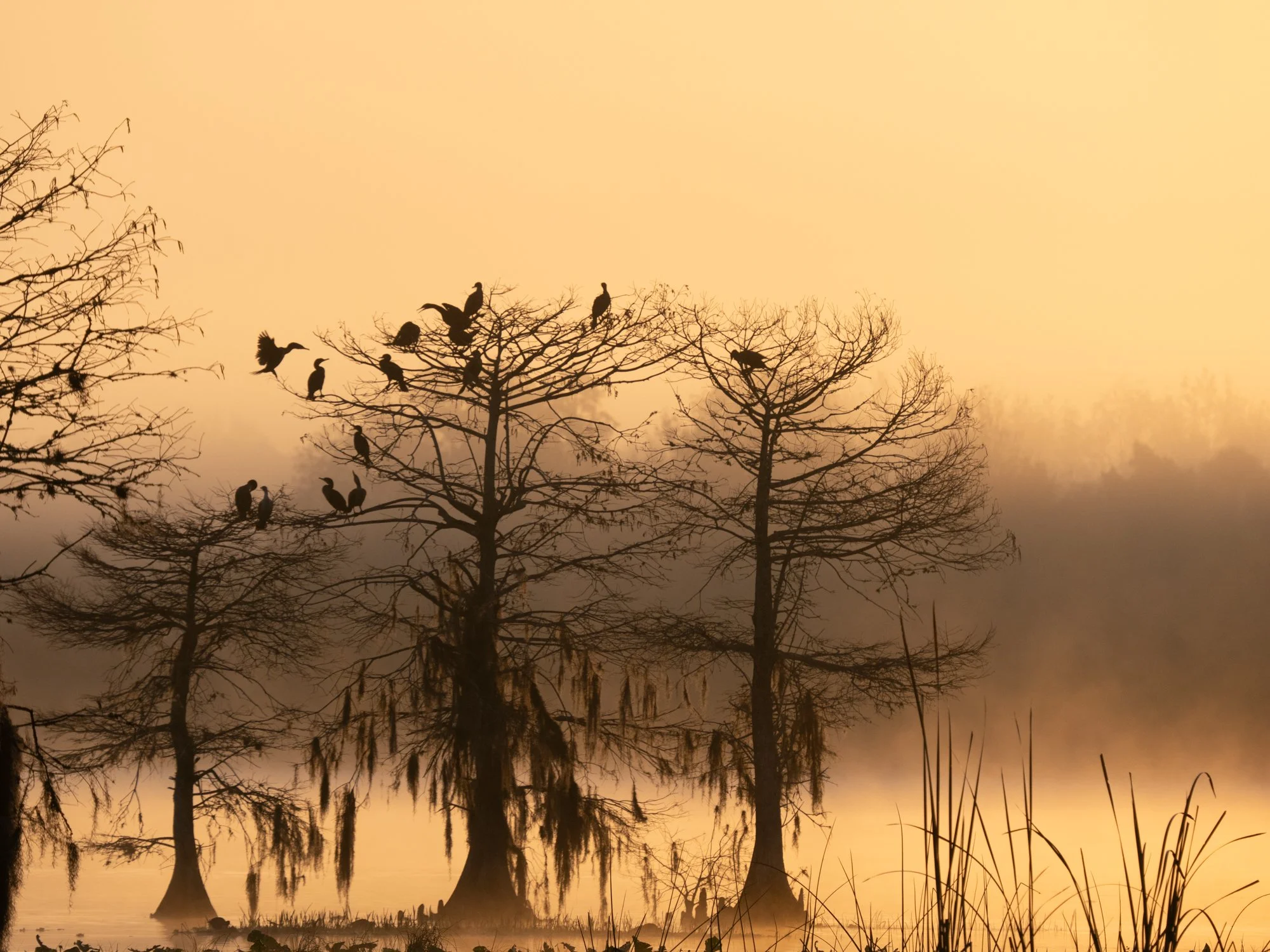
The morning after my arrival, I set out before dawn and entered the park at sunrise when the abundant number of birds began their morning rituals. As I walked down the path to a boardwalk crossing the wetlands, the sounds of Roseate Spoonbill, Glossy Ibis, and Purple Gallinule could be heard as the low fog lifted from the marsh. Anhinga were perched like decorations on the trees in the swamp. This was going to be a good day for bird photography.
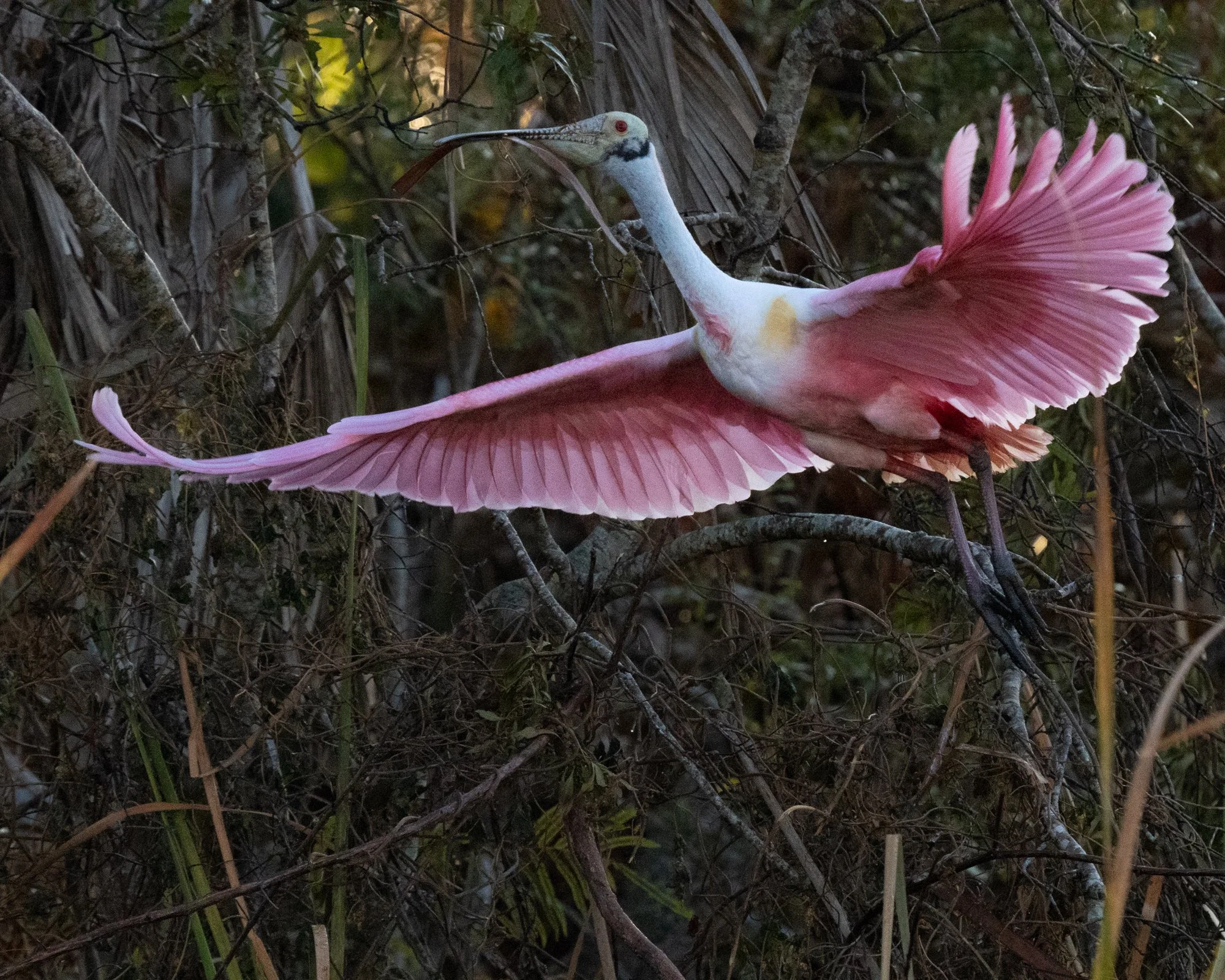
This is the time of year for the Roseate Spoonbills and Great Egrets to start building nests and getting ready to welcome the next generation. Numerous Spoonbills were busy bringing twigs to the nests in the wooded thickets at the water’s edge. Their spoon-like bills are designed for foraging in the shallows for aquatic food (from which they get the pink coloring) and not for ripping small branches from dead trees. Watching some of them really struggle, I could see the determination and effort that goes along with the annual nest-building rituals. The egrets seemed to be a little more organized. Next month’s essay will follow the Spoonbills and Egrets as they manage nests of young chicks.
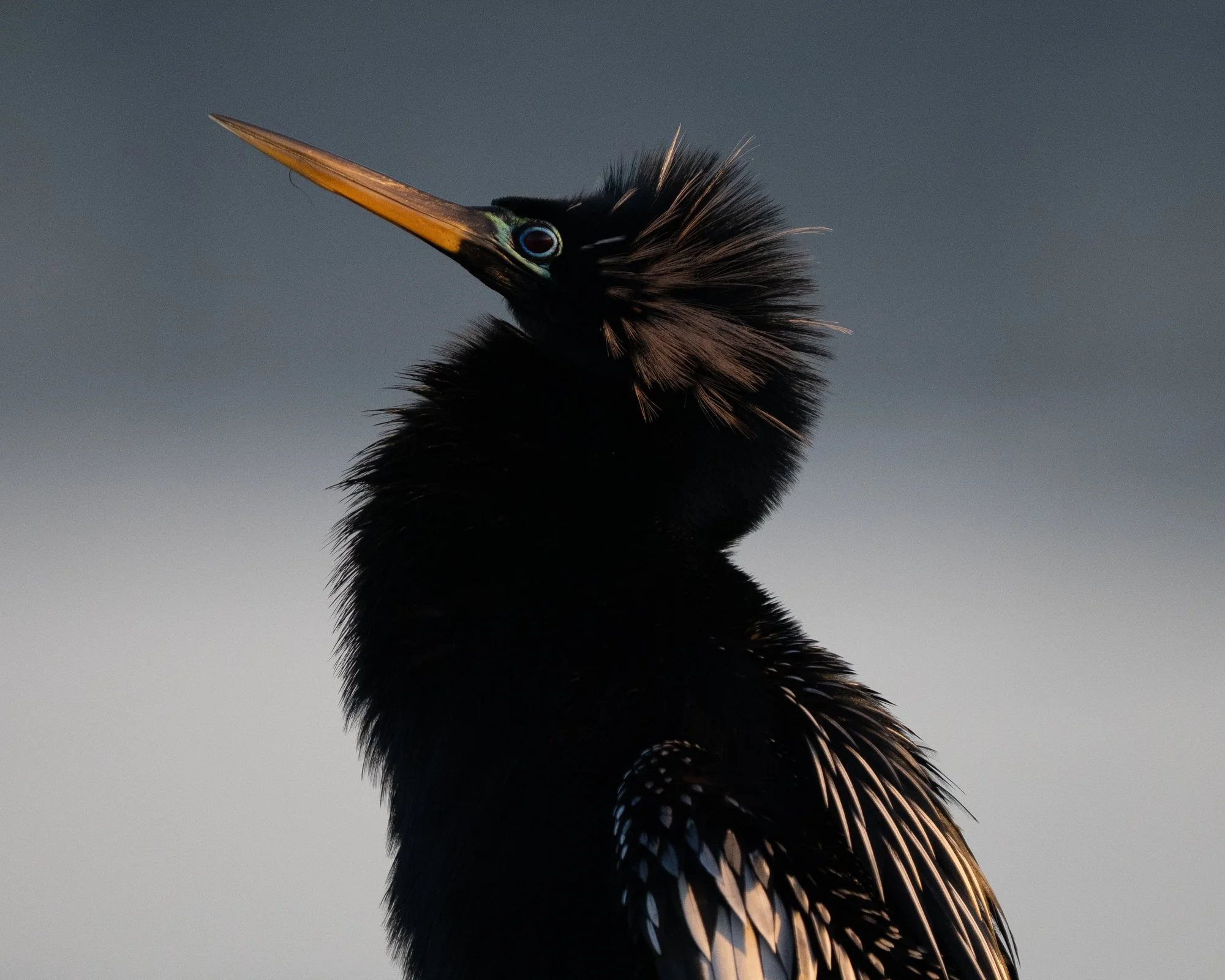
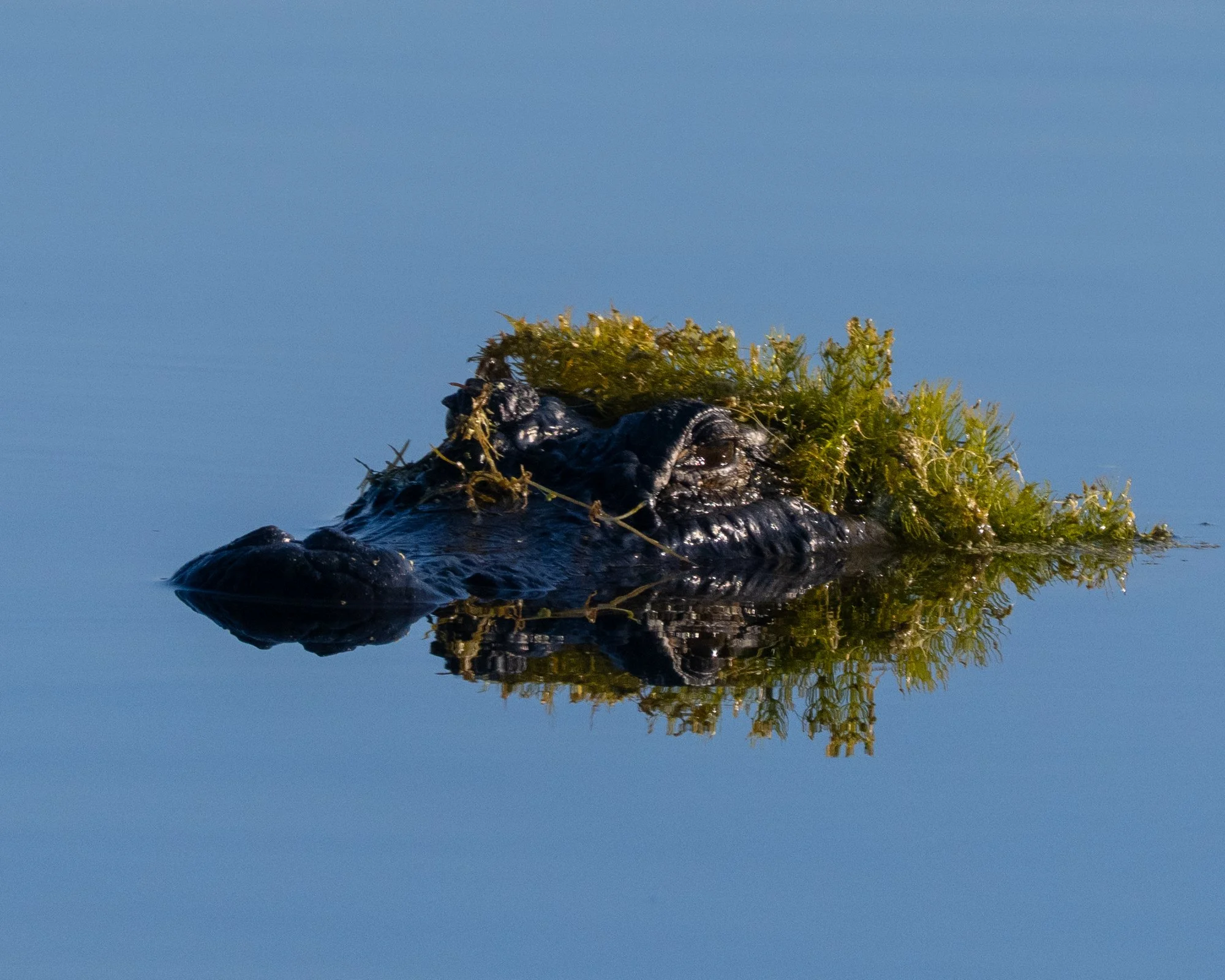
Shown below is a profile of an Anhinga in mating plumage as he greets the sunrise. One strange surprise was seeing an alligator prowling along the waterline with a “headdress” of fresh weeds (see below). There were plenty of gators in the water, but this guy was taking stealth to a new level. My brief research indicated that alligators do not purposely use camouflage but will take advantage of foliage that sticks when they surface. After taking his photo, I kept walking along the shore and had to turn around after hearing a commotion in the weeds. Within a split second our camouflaged gator had successfully grabbed an Ibis that was feeding too close to the shore. Other Glossy Ibis continued their frantic foraging nearby. (see video below). A lot of excitement for the first morning!